
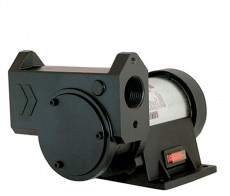
IRON-50 430 VAC
Self-suction with blades · 0.25 kW · 50 l/min
How does a pump move fluid?
A pump moves fluid by creating a pressure difference between the inlet and outlet of the device. The movement of the piston, impeller, or other mechanisms in the pump creates this pressure difference and drives the fluid through the pump. Different types of pumps use different mechanisms to create the pressure difference and move the fluid, such as the movement of a piston, the spinning of an impeller, or the rotation of blades in an axial flow pump.
What are the two types of pumps?
There are two main types of pumps: positive displacement pumps and dynamic pumps. Positive displacement pumps use a mechanism to trap and release a fixed volume of fluid, while dynamic pumps use the kinetic energy of the moving fluid to move the fluid through the pump.
What are pumps used for?
Pumps are used to move fluids from one point to another. This can include moving water for irrigation, pumping oil or gas for transportation or industrial processes, moving air in vacuum cleaners, and many other applications. Pumps are essential in many industries and are used in a wide range of applications.
Pumps are mechanical devices that use energy to move fluids from one point to another. The main application of pumps is to move fluids, such as gasses, oils, and water. An impeller or propeller is a part of a pump that helps move fluids through the device. An impeller pump is a pump that uses an impeller.
A well-known example of pumps is the water pump. What is a water pump? A water pump is a device that moves water from one place to another. It works by using mechanical energy to create a pressure difference, which causes the water to flow. Water pumps can be used for a variety of purposes, including irrigation, water supply, and drainage. Some water pumps are powered by electricity, while others use gasoline or diesel engines.